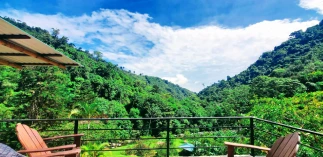
High in the mountains of Costa Rica, our retreat offers a tranquil escape, but beyond our lush greenery lies a vibrant world teeming with avian wonders. Today, we set our sights on the tricolored heron, a captivating visitor to the country’s coastal regions.
Looking for the best next step? Explore Hiking Trails Costa Rica.
Formerly known as the Louisiana heron, the tricolored heron (Egretta tricolor) is a medium-sized heron, gracing the shores of the Americas with its elegant presence. While you won’t find them at our mountain retreat, birding enthusiasts venturing to Costa Rica’s coasts might be lucky enough to spot these stunning birds.
A Shifting Palette of Feathers
The tricolored heron lives up to its name with a dramatic plumage transformation throughout its life. Juvenile tricolored herons are a study in brown, sporting a rich brown body and head with streaks of white on the neck and underparts. This plumage provides excellent camouflage as they stalk their prey in the shallows.
As they mature, tricolored herons undergo a remarkable metamorphosis. Adults transform into a vision of elegance, with a blue-grey head, neck, back, and upper wings. A stark white line streaks down their neck, adding a touch of contrast. Their bellies remain white, completing their sophisticated tricolor look.
A Solitary Hunter with a Keen Eye
Unlike some of their gregarious heron cousins, tricolored herons are more solitary creatures. They prefer to stalk their prey alone, wading patiently in the shallow waters of coastal lagoons, mangroves, and estuaries. Their long legs and necks allow them to navigate these areas with ease, while their sharp yellow eyes with black tips scan for any sign of movement.
The tricolored heron’s diet consists primarily of small fish, but they are not picky eaters. They readily snatch up crustaceans, shrimp, insects, and even small amphibians that come within reach. Their long, pointed bill acts as a formidable spear, perfectly suited for impaling their unsuspecting prey.
A Master of the Wading Technique
Tricolored herons employ a fascinating hunting technique known as “wading.” They slowly and meticulously wade through the shallows, their long legs taking measured steps. This methodical approach disturbs small fish and aquatic creatures, making them easier to spot and capture.
At times, tricolored herons might also employ a technique called “standing still.” They stand motionless in the water, blending in with their surroundings. This allows them to take advantage of an unsuspecting fish’s curiosity, luring it closer before striking with lightning speed.
A Species of Least Concern
The tricolored heron is a fortunate resident of the Americas, currently classified as a species of least concern by the International Union for the Conservation of Nature (IUCN). Their populations appear stable, thanks to the abundance of suitable coastal habitats in their range.
However, threats like habitat loss due to coastal development and pollution remain a concern. As responsible eco-travelers, we can all do our part by supporting organizations that work to conserve these vital ecosystems.
While you might not encounter the tricolored heron at our mountain retreat, on your Costa Rican adventure, keep an eye out for these graceful birds along the coast. With a bit of luck, you might witness their captivating display of hunting prowess and witness the beauty of their ever-changing plumage.
For more information, please view our comprehensive guide about the birds of Costa Rica