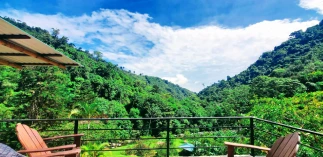
Welcome back, nature enthusiasts, to another avian adventure in the heart of Costa Rica! Today, we delve into the world of a wily resident, the White-throated Crake. While you might not see them often, their presence is undeniable in the verdant symphony that surrounds our mountain retreat.
Looking for the best next step? Explore Hiking Trails Costa Rica.
The White-throated Crake, a member of the rail family, is a true master of camouflage. At only 14-16 centimeters (5.5-6.3 inches) tall, they weave through the tall grasses and marshy wetlands that hug the base of our mountains. Their rufous brown head, neck, and back blend perfectly with the surrounding foliage, making them nearly invisible to the untrained eye.
But fear not, fellow birdwatchers! While a visual encounter might be a stroke of luck, the White-throated Crake has a captivating song that will announce their presence. Listen for a long, fast, explosive trill that fades out at the end, almost like a sizzling sound. This distinctive call, sometimes likened to an egg frying (hence their Costa Rican nickname, “Huevo Frito”), is their way of claiming territory and attracting mates.
If the trill piques your curiosity and you manage a glimpse, look for these key features:
- A splash of white: As their name suggests, their throat and upper breast are a stark contrast to their rufous coloring.
- Striking patterns: Their flanks and undertail coverts are barred black and white, adding a touch of elegance to their camouflage.
- Subtle differences: Keen observers might notice variations between subspecies. Look for a gray face in the L. a. cinereiceps subspecies, while the L. a. cerdaleus boasts an entirely rufous head and throat.
While patience is key when trying to spot a White-throated Crake, their presence adds another layer of wonder to the Costa Rican wetlands. Early mornings and late afternoons, when they are most active foraging for insects, seeds, and small invertebrates, are your best bet for an auditory encounter.
Beyond the Blog:
Our experienced naturalists here at the retreat can offer guided hikes through wetland areas where White-throated Crakes are known to reside. While a visual sighting might be a lucky break, their calls will surely fill the air, enriching your birding experience in Costa Rica.
Stay tuned for our next blog post, where we will explore another feathered jewel that graces the skies of our mountain paradise!
For more information, please view our comprehensive guide about the birds of Costa Rica