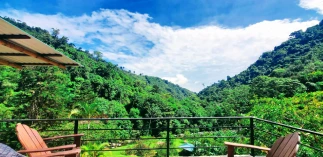
Our secluded mountain retreat here in Costa Rica offers not only breathtaking views and unparalleled tranquility, but also the chance to encounter a remarkable avian cast of characters. Today, we turn our binoculars to a secretive resident, the Gray-breasted Crake.
Want a deeper dive? Start here: Hiking Trails Costa Rica.
A Master of Camouflage
The Gray-breasted Crake (Laterallus exilis) is a tiny titan of the rail family, typically reaching only 5.5 to 6.1 inches (14-15.5 cm) in length. Despite its diminutive size, this bird is a master of camouflage. Its plumage is a beautiful tapestry of browns, grays, and blacks, perfectly suited to blend into the dense undergrowth it prefers.
A Flash of Gray in the Green Embrace
While spotting a Gray-breasted Crake can be a challenge, with some patience, you might catch a glimpse of its namesake feature – the pale gray head and breast. Look for a flash of this color darting through the tall grasses or reeds at the forest’s edge. A rufous patch on the nape can also offer a fleeting hint of the bird’s presence.
Listen for the Chirp
If the Gray-breasted Crake manages to stay hidden, its voice might give it away. Listen for a series of short, high-pitched chirps, often described as sounding like “chip-chip-chip.” This is the crake’s way of communicating with potential mates or keeping in touch with other individuals.
Habitat Hopping
The Gray-breasted Crake is a widespread resident in Costa Rica. While you might encounter it here at our mountain retreat in the lush undergrowth, it’s equally at home in wetlands, pastures, and surprisingly, even rice fields. This little bird is adaptable, as long as there’s dense vegetation to provide cover.
A Glimpse into a Secretive World
While the Gray-breasted Crake might not be the flashiest bird you see on your Costa Rican adventure, its secretive nature and unique chirp add another layer of wonder to the vibrant tapestry of life here at our retreat. So, keep your eyes peeled and your ears tuned – you might just be lucky enough to catch a glimpse of this fascinating little crake!
Interested in learning more about Costa Rican birds?
Stay tuned for our next blog post where we’ll explore another feathered friend you might encounter on your visit!
For more information, please view our comprehensive guide about the birds of Costa Rica