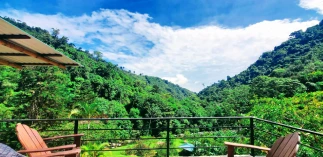
As the sun paints the mountain peaks a soft gold, a plump form scurries across the forest floor. Here, in the emerald embrace of the Costa Rican mountains, you might encounter the Chiriqui quail-dove (Zentrygon chiriquensis), a resident gracing our retreat with its rich plumage and shy demeanor.
If this topic speaks to you, you’ll love Hiking Trails Costa Rica.
Standing at a petite 9 inches tall, the Chiriqui quail-dove is a ground-dwelling gem. Unlike its flashier avian neighbors, this dove boasts a more subdued elegance. Its entire body is bathed in a warm rufous hue, reminiscent of burnished copper. This ruddy splendor sets it apart from other quail-doves, though the similarity to the Ruddy Quail-Dove earns it its alternative name, the Rufous-breasted Quail-Dove.
But look closer, and subtle details emerge. The Chiriqui quail-dove wears a distinguished crown of cool gray, adding a touch of sophistication to its otherwise fiery attire. A striking black “mustache” line further defines its face, lending a touch of personality.
While the Chiriqui quail-dove isn’t one for flamboyant displays, its beauty lies in its subtle charm. The delicate pinkish-red legs add another dash of color, completing the picture of understated elegance.
These shy birds are most at home on the forest floor, meticulously searching for fallen seeds and fruits. Their plump bodies and short wings make them adept runners, disappearing into the undergrowth with surprising bursts of speed if startled.
However, with a little patience and a quiet approach, you might be lucky enough to observe them. Early mornings and dusks are prime times to catch a glimpse. As you walk along the forest trails at our retreat, keep your eyes peeled for a flash of rufous amongst the fallen leaves.
If you’re fortunate enough to spot one, take a moment to appreciate its understated beauty. The Chiriqui quail-dove, a resident gracing the mountains of Costa Rica, is a testament to the elegance that can be found in subtlety.
Keep an eye out for our next blog post, where we’ll explore another feathered wonder of Costa Rica!
For more information, please view our comprehensive guide about the birds of Costa Rica