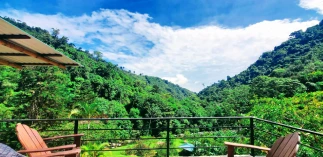
While the mountains of Costa Rica are a haven for resident birds with vibrant plumage and melodious calls, our avian visitors never fail to amaze. One such visitor gracing our skies for a short time each year is the Hudsonian Godwit, a champion of long-distance travel.
Make the most of your stay: continue with Hiking Trails Costa Rica.
A Shorebird at Heart
Though you might spot them in our lush highlands during migration, the Hudsonian Godwit (Limosa haemastica) is a true shorebird. Belonging to the sandpiper family (Scolopacidae), they have long legs perfectly adapted for wading through mudflats and shallow waters. Their scientific name, Limosa, is derived from the Latin word “limus,” meaning mud, highlighting their preferred habitat.
A Dazzling Transformation
Imagine a bird transforming its outfit twice a year! During the breeding season in the arctic bogs and tundra of Alaska and Canada, the male Hudsonian Godwit dons a spectacular breeding plumage. Their bellies turn a rich, rusty red, contrasting beautifully with their mottled brown backs.
By the time they reach Costa Rica on their southbound migration, they’ve switched to a more subdued grayish-brown plumage, perfect for camouflage during their long journey. This remarkable transformation helps them conserve energy and stay safe from predators.
Champions of Long-Distance Flight
The Hudsonian Godwit holds the record for the longest non-stop migration of any bird! Their incredible journey takes them from their breeding grounds in the Arctic all the way to the southern tip of South America, a distance of nearly 10,000 miles (16,000 kilometers).
A significant portion of this flight is made over open ocean, with some individuals flying for up to seven days without stopping! Their long, slender wings and lightweight bodies are perfectly adapted for these phenomenal feats of endurance.
Spotting the Hudsonian Godwit in Costa Rica
While the Hudsonian Godwit is not a common sight in Costa Rica, eagle-eyed birdwatchers can spot them during their migration periods – typically between March and May in spring and from September to November in fall.
They might be seen resting and refueling at freshwater marshes, lagoons, and flooded fields, often alongside other shorebirds like Willets and Yellowlegs. Look for their long, upturned bill, probing the mud for hidden invertebrates like worms and crustaceans.
A Glimpse into a Global Phenomenon
Seeing a Hudsonian Godwit in Costa Rica is a chance to witness a marvel of the natural world. These graceful birds connect the Arctic with the Southern Hemisphere, reminding us of the interconnectedness of our planet.
So, the next time you’re at our mountain retreat, keep your eyes peeled for these incredible globetrotters. A fleeting glimpse of the Hudsonian Godwit is a reminder of the wonders that take flight across our skies.
For more information, please view our comprehensive guide about the birds of Costa Rica