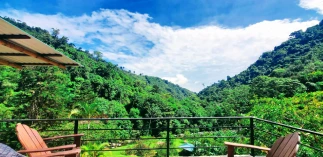
High in the misty mountains of Costa Rica, our secluded retreat offers not just breathtaking vistas and tranquil surroundings, but also the opportunity to encounter a dazzling array of avian visitors. Today, we turn our gaze to a sprightly shorebird gracing our wetlands with its fleeting presence – the Lesser Yellowlegs.
Looking for the best next step? Explore Hiking Trails Costa Rica.
A Delicate Dancer
The Lesser Yellowlegs is a medium-sized shorebird, boasting a slender build and an unmistakable elegance. Its upper parts are a captivating tapestry of mottled gray-brown, black, and white, while its underparts are adorned with a pristine white canvas, accented by a few streaks of brown on the breast and neck. But the true stars of the show are undoubtedly its legs – a vibrant yellow that injects a burst of sunshine into its overall look.
Differentiating the Doubles
At first glance, the Lesser Yellowlegs might appear to be twins with its close relative, the Greater Yellowlegs. However, a closer look reveals some subtle yet crucial differences. The Lesser Yellowlegs is the smaller of the two, with a shorter, straighter, and more delicate bill that’s roughly the same length as its head. Additionally, its neck is shorter, its head more rounded, and its chest is slightly smaller compared to its larger counterpart.
A Master of Marsh Manoeuvres
The Lesser Yellowlegs is a true wetland acrobat. It gracefully stalks its prey across mudflats and shallow pools, its long legs taking high-stepping strides as it probes the soft earth with its slender bill in search of a tasty morsel. Often found in loose flocks with Greater Yellowlegs, these birds create a captivating ballet of movement, their synchronized foraging a testament to their keen instincts.
A Voice Like a Whistle
While the Lesser Yellowlegs may not be the most flamboyant songbird, its vocalizations hold a certain charm. Listen closely, and you might be rewarded with a series of soft, whistled “tew” calls, typically just one or two notes in quick succession. This simple yet effective communication keeps them connected with their flock and helps them navigate their wetland domain.
A Transient Treasure
The Lesser Yellowlegs is a migratory marvel. It breeds in the boreal forests of North America, but during its winter migration, it graces Costa Rica with its presence, particularly in shallow, weedy wetlands and flooded fields. While sightings in the mountains are less frequent compared to the Central Valley region, their occasional visits to our retreat’s wetlands are a delightful surprise.
A Call to Conservation
The Lesser Yellowlegs, like many shorebirds, faces the threat of habitat loss. Wetland degradation due to human activity disrupts their breeding and wintering grounds. By protecting these vital ecosystems, we can ensure that future generations can continue to marvel at the dazzling display of the Lesser Yellowlegs and its fellow wetland wonders.
So, the next time you’re exploring the wetlands of our Costa Rican retreat, keep an eye out for a flash of yellow amongst the reeds. With a little patience and a keen eye, you might just be lucky enough to witness the delightful Lesser Yellowlegs in all its glory.
For more information, please view our comprehensive guide about the birds of Costa Rica