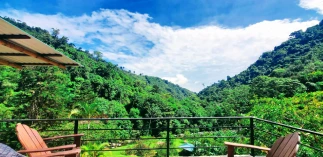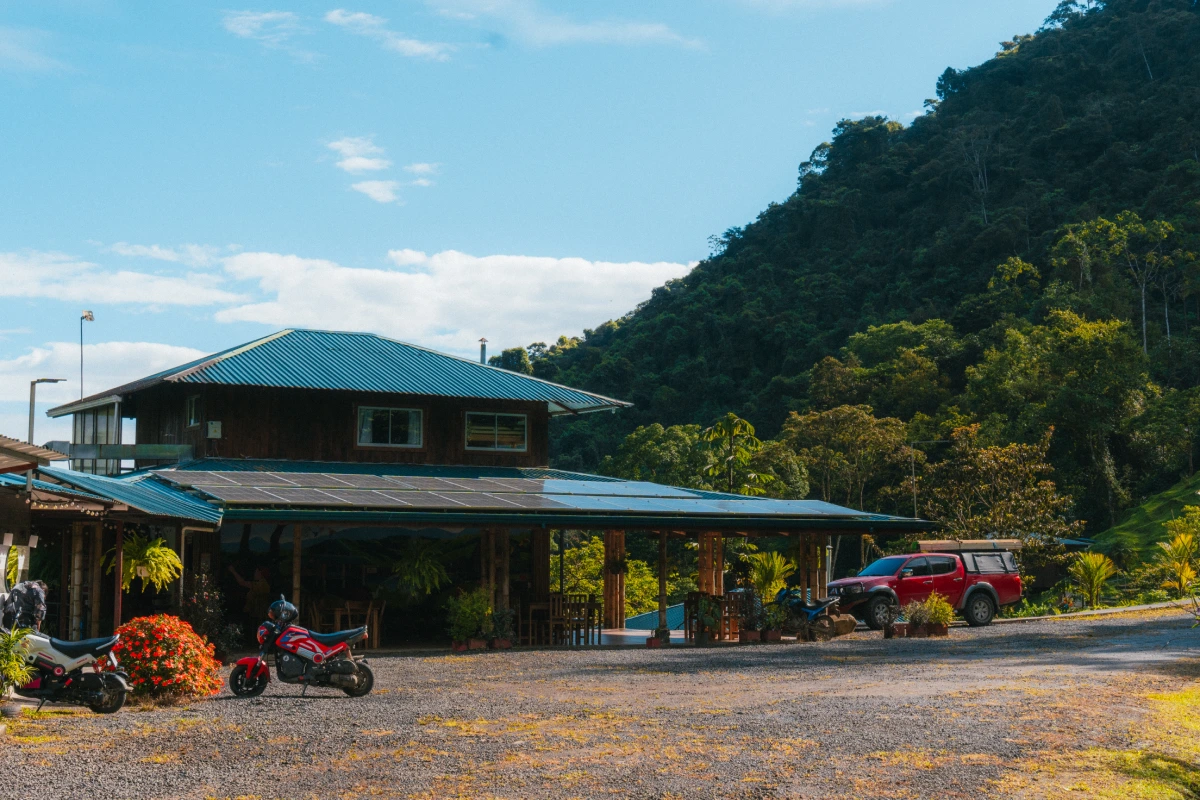
Here at our Costa Rican retreat, nestled in the emerald embrace of the mountains, we are surrounded by a symphony of life. From the noisy calls of toucans to the melodic whistles of wrens, the birdsong is the soundtrack of our tranquility. Today, we turn our attention to a vibrant resident of the mountain forests, the Red-legged Honeycreeper.
¿Quieres profundizar más? Comienza aquí: Senderos de Costa Rica.
A Jewel of the Rainforest Canopy
The Red-legged Honeycreeper (Dacnis venusta) is a small tanager just 12 cm long. What it lacks in size, it makes up for in dazzling color. The males are a sight to behold, with slate blue upper parts that contrast sharply with a bright scarlet rump and thighs. Its underside is a pale yellow, and its dark eyes shine with intelligence. The females, though lacking the vibrant scarlet, are no less beautiful. They sport a muted olive green upper body with a yellowish underside and two pale wing bars.
These little jewels of the rainforest are most often seen flitting through the mid and upper canopy. Their preferred habitat is humid forests, particularly those on mountain slopes. So, if you are staying at our retreat and venture along the higher trails, keep your eyes peeled! You might catch a scarlet flash gliding through the leaves.
A Life of Sweet Indulgence
Red-legged Honeycreepers are primarily frugivorous, meaning their diet consists mainly of fruits. They have a particular fondness for berries and small, fleshy fruits that grow on trees and shrubs. Their sharp beaks are perfectly adapted to gather and consume these sweet treats. They often feed in small groups, moving quickly and nimbly as they fly from branch to branch in search of a tasty morsel.
The Serenade of a Songbird
While not known for elaborate songs, Red-legged Honeycreepers have a vocal repertoire. Their calls are described as short, sharp whistles and chirps. These vocalizations are likely used for communication between pairs and to maintain contact within a flock.
A Species to Treasure
Fortunately, the Red-legged Honeycreeper is listed as “Least Concern” by the IUCN. However, like all rainforest creatures, habitat loss is a potential threat. By supporting ecotourism initiatives like our mountain retreat, you can help ensure the continued conservation of these vibrant tanagers and the lush rainforests they call home.
Watching Them Closely
So, the next time you explore the mountain trails near our retreat, don’t forget to keep an eye out for the Red-legged Honeycreeper. With a bit of patience and a keen eye, you might be rewarded with a glimpse of this dazzling songbird flitting through the emerald canopy.
Para obtener más información, consulte nuestra guía completa sobre las aves de Costa Rica.