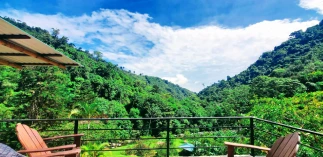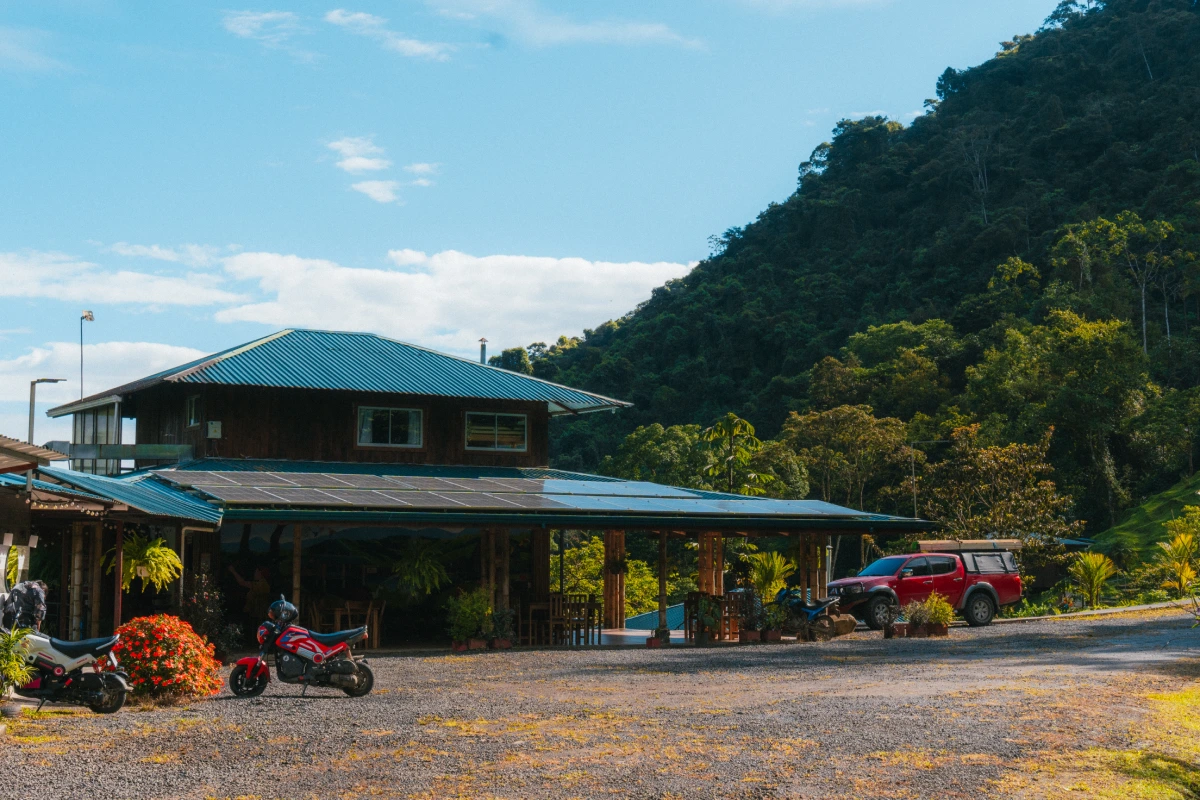
Here, in our Costa Rican haven, nestled in the emerald embrace of the mountains, we may not have the crashing waves and salty air of the coast. But fear not, bird lovers! The incredible avian diversity of Costa Rica extends far beyond the beaches. Today, we turn our binoculars to a resident of the tropical lowlands, the aptly named Mangrove Swallow (Tachycineta albilinea).
¿Quieres profundizar más? Comienza aquí: Senderos de Costa Rica.
These little dynamos are a dazzling sight. Imagine a jewel come to life: its upper parts shimmer with an iridescent blue-green, catching the sunlight like a beetle’s shell. Black flight feathers provide a stark contrast, while the rump bursts into a bright white, a beacon against the lush greenery. Below, a gleaming white belly completes the picture of elegance.
But the Mangrove Swallow is not just a pretty face. Look for the characteristic white stripe over its eye, a supraloral stripe that sets it apart from close relatives like the Violet-green Swallow. Look closely, and you might even notice subtle differences between the sexes: females tend to have a bit less white on the wings.
While you won’t find them flitting around our mountain retreat, venture towards the Pacific or Caribbean coasts and you’ll have a good chance of encountering these aerial acrobats. Mangroves, coastal lagoons, and even inland rivers are their playgrounds. They are rarely alone, flitting in small groups, often joining other swallow species for a dazzling aerial ballet.
Their lives revolve around water. With rapid wingbeats and gliding bursts, they patrol the sky, picking off flying insects, their main food source. Between feeding forays, they perch on branches or wires, surveying their territory with bright, dark eyes.
The breeding season for the Mangrove Swallow spans from March to August. They prefer cavities in trees or man-made structures, like nest boxes, to raise their young. Parents work tirelessly, bringing insects to feed their hungry chicks.
While they are classified as “Least Concern” by international conservation bodies, their populations show signs of decline. Habitat loss due to mangrove deforestation is a major threat. So, next time you’re on the coast, take a moment to appreciate these vibrant swallows. Their presence is a reminder of the delicate balance of our ecosystems.
Tips for spotting them:
- Look for them near bodies of water, especially mangroves and coastal lagoons.
- Observe small flocks flying low over the water with rapid wingbeats and occasional glides.
- The white rump and supraloral stripe are key identification features.
Listen for: A sharp trill.
By keeping our eyes peeled and ears tuned, we can ensure these little blue flashes continue to grace Costa Rican skies for generations. After your birdwatching adventures, return to our mountain haven, where tranquility and stunning views await!
Para obtener más información, consulte nuestra guía completa sobre las aves de Costa Rica.