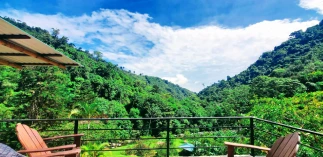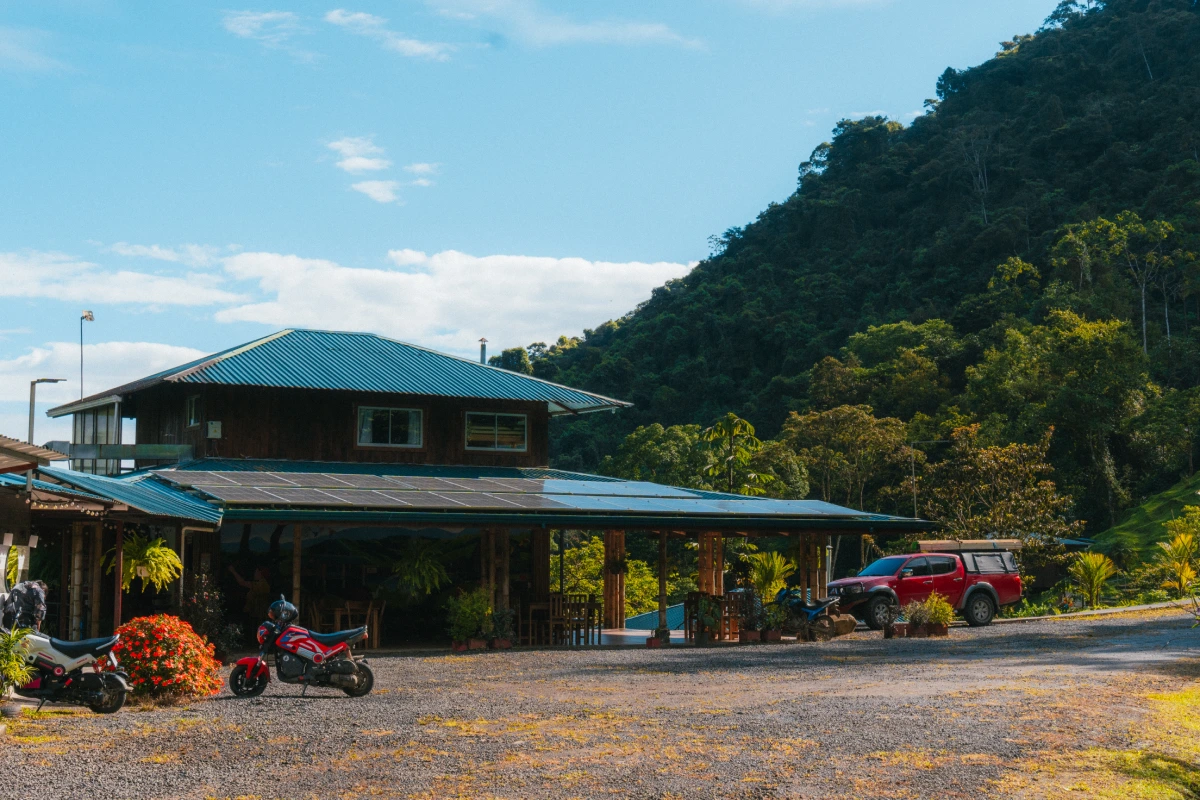
Our mountain retreat here in Costa Rica offers a symphony of bird songs each morning. But amidst the chorus, there is a blue flash that catches the eye: the barn swallow. While you might expect this common bird to prefer open fields, these incredible aerial acrobats also grace our mountain skies, especially during their migratory seasons.
¿Buscas el mejor próximo paso? Explora Senderos de Costa Rica.
A Global Traveler at Home in Costa Rica
The barn swallow (Hirundo rustica) is a true globetrotter. With the title of the most widespread swallow species, it can be found on every continent except Antarctica! Here in Costa Rica, barn swallows are most commonly seen along the coasts and in the lowlands, but they can also be spotted flying through mountain valleys, especially during their migration periods.
A Distinctive Beauty
These birds are a sight to behold. Their back is a dazzling iridescent blue, capturing sunlight like a living jewel. Their belly ranges from a warm beige to a bright white, depending on the subspecies. The most striking feature, however, is their deeply forked tail, which aids them in their incredible flight maneuverability.
Masters of the Skies
Barn swallows are aerial virtuosos. They spend most of their days flying, hunting insects. Their forked tail and streamlined body allow them to perform acrobatic feats, swooping and diving with incredible agility. Watching them hunt flying insects is a fascinating spectacle, an aerial ballet worthy of nature.
Finding a Home in the Mountains
While barn swallows are not cavity-nesting birds like some of our resident mountain birds, they easily adapt to man-made structures. They often build their cup-shaped nests under eaves, overhangs, or even bridges. It’s not uncommon to see them fluttering around the buildings of our mountain retreat, searching for suitable nesting sites.
Seasonal Visitors
The presence of the barn swallow at our mountain retreat is seasonal. They primarily breed in North America during the summer months and then migrate south for the winter. Here in Costa Rica, they are most commonly observed from March to May and from September to November.
Una Señal de un Ecosistema Saludable
The presence of barn swallows is a positive indicator of a healthy ecosystem. Their reliance on insects as prey shows a diverse and thriving insect population. So, the next time you see a blue flash darting through the mountain air, take a moment to appreciate the barn swallow, a remarkable avian traveler gracing the skies of Costa Rica.
Para obtener más información, consulte nuestra guía completa sobre las aves de Costa Rica.