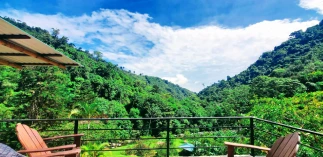
Our mountain retreat offers the tranquility of the highlands, but the beauty of Costa Rica extends far beyond the lush vegetation. Today, we turn our gaze a bit lower in altitude, towards the stunning coasts, to meet a fascinating resident: the Collared Plover.
¿Buscas el mejor próximo paso? Explora Senderos de Costa Rica.
This small shorebird, a member of the Charadriidae family, may not be the most striking in plumage, but its charm lies in its delicate features and resilience.
A Tiny Traveler
At 18 centimeters (7.1 inches) in size and weighing just 35 grams (1.2 ounces), the Collared Plover is a true lightweight. They are found along the tropical and temperate coasts of the Americas, from central Mexico to Chile and Argentina. Here in Costa Rica, they adorn the Pacific and Caribbean coasts, frequenting sandy beaches, riverbanks, and even inland lagoons.
Spotting the Collared Plover
Look for these small plovers in pairs or as solitary birds, unlike many other shorebirds that flock together. Their slender black bill and strikingly patterned head are notable features. A diagnostic feature is the narrow black band on the chest, although ironically, it lacks the pale collar that gives it its name (confusing, right?). Their long pink legs add a touch of elegance to their overall appearance.
Listen for the “Pip”
The flight call of the Collared Plover is a sharp metallic “pip,” a sound you might hear as they flutter along the coast in search of food. Their diet consists mainly of small insects, crustaceans, and marine worms, which they skillfully peck from the sand or mudflats with their agile bill.
Nesting in Paradise
The Collared Plover finds a perfect breeding ground in Costa Rica. They lay their eggs in simple scrapes on the beach, often camouflaged with stones or shells. Both parents take turns incubating the eggs and caring for the chicks, a testament to their strong parental instinct.
A Coastal Gem to Protect
While the Collared Plover is currently listed as “Least Concern” by the IUCN, their populations show signs of decline. Habitat loss due to coastal development and disturbance from human activity are threats they face. So, if you’re lucky enough to spot a Collared Plover on your Costa Rican adventure, remember to observe from a respectful distance and avoid disturbing their habitat.
Beyond the Mountains
Our mountain retreat may be far from the coast, but the Collared Plover reminds us of the rich biodiversity that spans Costa Rica. From majestic peaks to sandy beaches, this beautiful country offers a haven for an incredible variety of birds. So keep your eyes peeled during your explorations, and you might discover a feathered friend you never knew existed.
Para obtener más información, consulte nuestra guía completa sobre las aves de Costa Rica.