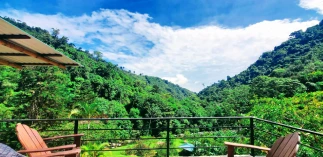
High in the mountains of Costa Rica, our retreat offers a paradise of tranquility. But did you know that our skies are also a highway for incredible feathered travelers? Today, we turn our gaze to a remarkable long-distance migrant, the Red Knot (Calidris canutus).
Aprovecha al máximo tu estancia: continúa con Senderos de Caminata en Costa Rica.
The Red Knot is not a permanent resident of Costa Rica. Instead, it graces our shores during its epic biannual migratory journey. These medium-sized shorebirds, with their distinctive long, slender bill and small head, come in two “flavors”: breeding plumage and non-breeding plumage.
During the breeding season, high in the Arctic tundra, Red Knots transform into rusty wonders. Their face, neck, chest, and undersides turn a vibrant chestnut red, giving them their name. The upper parts, meanwhile, are adorned with a beautiful mosaic of dark brown, black, reddish, and gray feathers.
Come autumn, and the red fades, replaced by a more subdued winter plumage of pale gray back and white undersides. This camouflage perfectly suits their wintering grounds on sandy beaches.
But why do Red Knots undertake such a monumental journey, covering over 14,000 kilometers between their breeding and wintering areas? The answer lies in food.
Red Knots are opportunistic feeders, and their diet consists mainly of insects, crustaceans, and mollusks. During the breeding season, the Arctic tundra provides an abundance of insects and larvae, ideal for raising chicks.
However, when winter arrives, the Arctic buffet closes. This is where Costa Rica, with its extensive coastlines, comes into play. Our shores offer a crucial stopover for Red Knots on their southward migration. Here, they recharge with a variety of marine invertebrates in the mudflats and along the sandy beaches.
These stopover sites are crucial for Red Knots. They need to build up fat reserves for the next leg of their migration to South America. Studies suggest that a Red Knot can double its weight during its stay in Costa Rica, demonstrating the importance of our coastal ecosystems.
Unfortunately, the incredible journey of the Red Knot faces threats. Habitat loss, both in their breeding and wintering areas, disrupts their delicate migratory cycle. Additionally, the decline of food sources, such as horseshoe crab eggs along the North American Atlantic coast, can affect their ability to build fat reserves.
The presence of the Red Knot in Costa Rica is a reminder of our planet’s interconnectedness. Their survival depends on healthy ecosystems across continents. By protecting our shores and promoting sustainable practices, we can help ensure that these rusty-red wonders continue to grace our skies for generations to come.
Observing the Red Knot:
While not as common as some resident birds, Red Knots can be observed along the Costa Rican coast, particularly during their southward migration (late August to October) and northward (mid-March to late April). Look for them in large flocks feeding in the mudflats and along the sandy beaches. Binoculars are recommended to appreciate their distinctive plumage.
Contribute:
- Support organizations working to conserve coastal ecosystems in Costa Rica and worldwide.
- Reduce your environmental impact by making sustainable choices.
- Spread awareness about the plight of migratory birds like the Red Knot.
By appreciating these incredible avian travelers, we can help ensure that the sky over our Costa Rican retreat remains a highway for wonder.
Para obtener más información, consulte nuestra guía completa sobre las aves de Costa Rica.