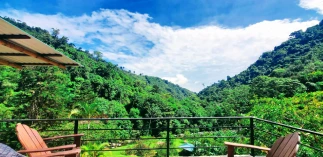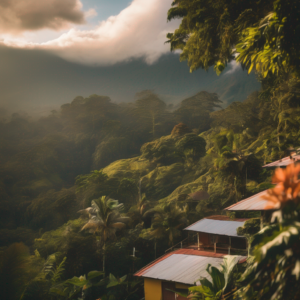
High in the mountains of Costa Rica, where the emerald embrace of the rainforest meets the cool kiss of the cloud forest, resides a tiny dancer with an extravagant spirit: the Lance-tailed Manakin. This dazzling little bird is a resident of the lush secondary forests thriving on the mountain slopes around our retreat, and a captivating sight for our guests lucky enough to witness its displays.
Aprovecha al máximo tu estancia: continúa con Senderos de Caminata en Costa Rica.
A Tale of Two Plumages
The Lance-tailed Manakin is an example of sexual dimorphism, meaning that males and females have completely different appearances. The males are the true stars of the show, dressed in a striking tuxedo of glossy black plumage. A vibrant cerulean blue runs down their back, a splash of color that shines like a piece of the Costa Rican sky. But the real protagonist is their head. Atop their crown sits an extravagant crest of fiery red feathers, adding a touch of drama to their already theatrical presence.
The females, on the other hand, are dressed in a more subdued olive-green mantle, with lighter underparts. However, both sexes share a common feature: their short, stubby tail adorned with two long, pointed central feathers. These elongated feathers, the source of the bird’s name, are particularly prominent in the males and add a whimsical touch to their displays.
The Art of the Lek
Unlike many birds that form pairs, the males of the Lance-tailed Manakin participate in a unique mating system called lek. Here, the males gather in specific spots within the forest, known as leks, to offer a spectacular show in hopes of attracting a mate.
Our guests venturing into the forest during the breeding season (usually from February to June) might stumble upon a lek: a clearing full of activity. Here, the males transform into feathered dancers, their black bodies becoming a blur of movement as they fly from perch to perch. Their red crests bristle and their long tails sway back and forth in a fascinating display.
But the dance is not just about elegant steps. The males also release an impressive vocal repertoire. Their songs, a mix of whistles, clicks, and pops, resonate through the forest, a serenade designed to win the heart (or rather the ears) of passing females.
A Show with a Purpose
The female Lance-tailed Manakin is the ultimate judge in this avian competition. She observes the males’ displays with a keen eye, seemingly unimpressed by mere acrobatics. Researchers believe she is attracted to males capable of producing the most complex and varied vocalizations, a sign of good genes and good health.
Once a female selects a mate, the lek fulfills its purpose. She takes on the task of building the nest and raising the young entirely on her own. The male, his extravagant display complete, fades into the background, his role in reproduction finished.
A Glimpse into the Rainforest Ballet
If you are lucky enough to observe a Lance-tailed Manakin during your stay at our mountain retreat, take a moment to appreciate the dazzling show unfolding before you. It is a performance set amidst the emerald tapestry of the rainforest, a testament to the wonders of nature and the captivating dance of life.
Stay tuned for our next blog post, where we will explore another feathered gem of the Costa Rican mountains!
Para obtener más información, consulte nuestra guía completa sobre las aves de Costa Rica.