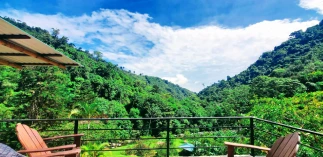
In the high mountains of Costa Rica, where the emerald embrace of the rainforest thins and gives way to a cool coniferous forest, a discreet songbird takes center stage: the Gray-cheeked Thrush. Unlike its vibrant plumage neighbors, this thrush prefers subtlety, wrapped in soft grays and browns that blend perfectly with the mossy undergrowth. But don’t let its discreet appearance fool you – the Gray-cheeked Thrush is a captivating resident of our mountain refuge, offering a window into the wonders of long-distance migration.
Aprovecha al máximo tu estancia: continúa con Senderos de Caminata en Costa Rica.
A Master of Camouflage:
Spotting a Gray-cheeked Thrush can be a charming challenge. Its plumage is a symphony of soft browns on the upper parts, transforming into a pale grayish-white on the lower parts, with fine stripes adorning the chest. Unlike other thrushes of the Catharus genus, they lack prominent facial markings, as their grayish face lacks the beige eye-ring or warm tones seen in their counterparts. This cryptic coloration allows them to blend with the filtered light that seeps through the forest canopy, making them masters of camouflage.
A Song that Resonates through the Mountains:
While its appearance is discreet, the song of the Gray-cheeked Thrush is quite the opposite. Its ethereal melody, described as a series of descending phrases with a vibrant quality, resonates through the mountain forests. Often heard in the late afternoon when perched atop trees, its song adds a touch of magic to the fresh mountain air. For the patient observer, this melodious call can be a valuable clue, revealing their presence even when they remain hidden among the dense foliage.
A Long and Arduous Journey:
The Gray-cheeked Thrush is a champion of long-distance migration. It breeds in the far north of North America and eastern Siberia, embarking on a remarkable journey south, with some individuals traveling over 3,000 kilometers to reach their wintering grounds in the Amazon basin. During their migratory stopovers in Costa Rica, they can be found at the highest altitudes, inhabiting dense coniferous forests and willow and alder thickets. Here, they refuel on a diet of insects collected from the forest floor and berries found in the undergrowth.
A Transient Treasure of the Highlands:
The Gray-cheeked Thrush may not be a permanent resident of our mountain refuge, but its presence adds a touch of wonder to the experience. Its shy nature and subtle beauty make it a valuable bird for bird enthusiasts, while its captivating song serves as a reminder of the interconnectedness of the natural world. So, the next time you find yourself exploring the cooler, coniferous highlands of our refuge, keep your ears tuned to the ethereal melody of the Gray-cheeked Thrush: a fleeting glimpse into the fascinating world of long-distance bird travel.
Para obtener más información, consulte nuestra guía completa sobre las aves de Costa Rica.