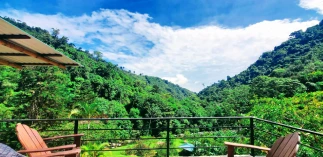
While our mountain retreat offers breathtaking views and a rich tapestry of rainforest life, the diversity of Costa Rica’s birds extends far beyond the jungle’s edge. Today, we set our sights on a rather unexpected visitor to our country: the Buff-breasted Sandpiper, a charismatic shorebird that graces our skies during its migration seasons.
Aprovecha al máximo tu estancia: continúa con Senderos de Caminata en Costa Rica.
A Cinnamon and Brown Splendor
Imagine a small, delicate shorebird with a warm cinnamon-colored body, accented by fine black stripes on its crown. That’s the Buff-breasted Sandpiper in a nutshell. Its large, expressive eyes and short, slender bill give it a peaceful, almost dove-like appearance. Unlike its wetland-loving cousins, this sandpiper prefers dry, grassy habitats. So, if you venture beyond the mountains during migration periods (from March to May and September to November), keep an eye out for these little dancers in plowed fields, turf farms, or even higher beach areas.
A Unique Mating Ritual
The Buff-breasted Sandpiper stands out not only for its appearance but also for its fascinating breeding behavior. Unlike most shorebirds that form pairs, this species practices lekking, a common system among grouse but rare in the shorebird world. In their Arctic breeding grounds, male Buff-breasted Sandpipers transform into extravagant performers. Imagine them puffed up, with chests swollen to extraordinary proportions, wings raised high, and bills pointing skyward. This elaborate display is their way of attracting mates.
A Conservation Concern
The beauty of the Buff-breasted Sandpiper is unfortunately overshadowed by an urgent conservation issue. The massive loss of grasslands along its migratory route has led to a significant population decline. Here at the retreat, we are strong advocates for sustainable practices and environmental awareness. By choosing eco-friendly travel options and supporting conservation efforts, we can all play a role in protecting this fragile visitor and its cherished high-grassland habitat.
Spotting the Buff-breasted Sandpiper in Costa Rica
While the Buff-breasted Sandpiper is not a resident of our mountain retreat, it can be observed in drier regions during migration. Here are some tips to increase your chances of seeing it:
- Visit during migration seasons: March to May and September to November are peak times.
- Explore dry habitats: Look for plowed fields, turf farms, or higher beach areas.
- Listen for calls: Its call is a sharp, whistled “pip.”
- Bring binoculars: Its small size makes binoculars essential for good viewing.
By following these tips and venturing out during migration periods, you might be lucky enough to witness the delicate dance of the Buff-breasted Sandpiper in the Costa Rican grasslands.
Remember, even a small retreat nestled in the mountains can contribute to appreciating and protecting Costa Rica’s incredible bird diversity. So, the next time you explore our beautiful country, keep your eyes peeled for this unique and threatened shorebird.
Para obtener más información, consulte nuestra guía completa sobre las aves de Costa Rica.