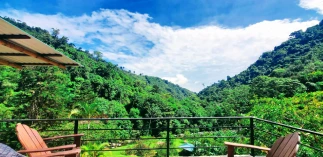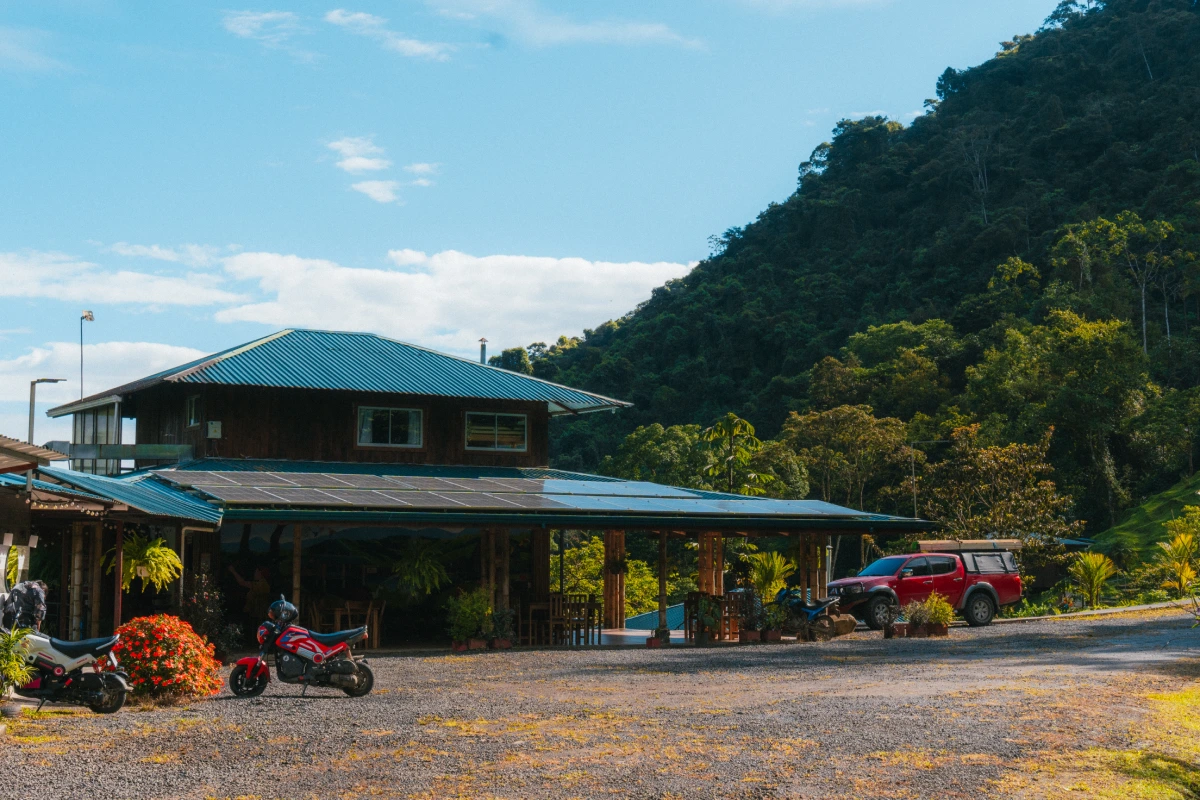
Fermez les yeux et imaginez ceci : Vous êtes installés sur le balcon de votre cabane privée ici, dans notre refuge costaricien, entourés d’une tapisserie verdoyante de forêt tropicale. Alors que les premiers rayons de l’aube embrassent les feuilles, un chant d’oiseaux éclate. Mais au milieu de la symphonie, une mélodie distinctive émerge – un trille clair et sifflé qui semble dire “Vous ne pouvez pas me voir !”
Looking for the best next step? Explore Hiking Trails Costa Rica.
C’est, mes amis, le charmant Viréo à Tête Grise, un résident éblouissant des forêts de montagne du Costa Rica, y compris celle qui embellit notre refuge. Bien que vous les entendiez souvent, repérer ces joyaux d’émeraude peut être un délicieux défi.
Un Maître du Camouflage
Le Viréo à Tête Grise (Vireolanius pulchellus) porte bien son nom. Son plumage est d’un vert citronné époustouflant, imitant presque le feuillage vibrant qu’il abrite. Ce camouflage remarquable lui permet de se fondre parfaitement dans la canopée de la forêt tropicale, faisant de lui un véritable maître du cache-cache.
Une Voix Sifflante
Malgré leur camouflage magistral, les Viréos à Tête Grise sont loin d’être timides. Leur chant sifflé à trois notes, souvent décrit comme “pi-pi-pi”, est un son familier dans les forêts de montagne. Il est intéressant de noter que les recherches suggèrent que ce chant pourrait être lié à leur habitat et à leur morphologie, ce qui en fait un identificateur unique pour les ornithologues.
Un Habitant du Royaume de la Forêt Tropicale
Le Viréo à Tête Grise est un résident permanent du Néotropique, que l’on trouve plus précisément dans les forêts tropicales humides de basse altitude d’Amérique centrale. Son aire de répartition s’étend du sud-est du Mexique jusqu’à l’est du Panama, faisant du Costa Rica un endroit privilégié pour le rencontrer.
Un Aperçu de leur Vie
Les Viréos à Tête Grise sont des insectivores, ce qui signifie que leur régime alimentaire se compose principalement d’insectes et d’autres arthropodes. Ce sont des chasseurs habiles, se faufilant à travers les feuilles et attrapant habilement leurs proies. Si les insectes constituent leur plat principal, ils peuvent occasionnellement se régaler de petits fruits et de graines pour un peu de variété alimentaire.
Malheureusement, on ne sait pas grand-chose sur leurs habitudes de reproduction et leur cycle de vie. Mais les chercheurs s’efforcent constamment de percer les secrets de ces énigmes d’émeraude.
Observer le Viréo à Tête Grise
Avec de la patience et un œil vif, vous aurez peut-être la chance d’apercevoir le Viréo à Tête Grise. Voici quelques conseils :
- Soyez attentif à leur chant: Leur trille sifflé est un excellent indice. Une fois que vous l’entendez, gardez un œil sur la zone d’où provient le son.
- Recherchez tout mouvement: Comme leur plumage vert se fond si bien dans le décor, guettez tout frétillement de feuilles.
- Participez à une excursion guidée d’observation des oiseaux: Notre refuge propose des excursions guidées d’observation des oiseaux dirigées par des naturalistes expérimentés qui peuvent vous aider à repérer ces beautés insaisissables.
Un Trésor Costaricien
Le Viréo à Tête Grise est un véritable joyau des forêts tropicales du Costa Rica. Son plumage vibrant, son chant captivant et sa nature secrète en font un ajout fascinant à la riche biodiversité du pays.
Alors, la prochaine fois que vous serez dans notre refuge de montagne, tendez l’oreille au cri du “Vous ne pouvez pas me voir !”. Avec un peu de patience et ces conseils pratiques, vous pourrez peut-être dévoiler le joyau d’émeraude qui se cache dans la canopée de la forêt tropicale.
Pour plus d’informations, veuillez consulter notre guide complet sur les oiseaux du Costa Rica.